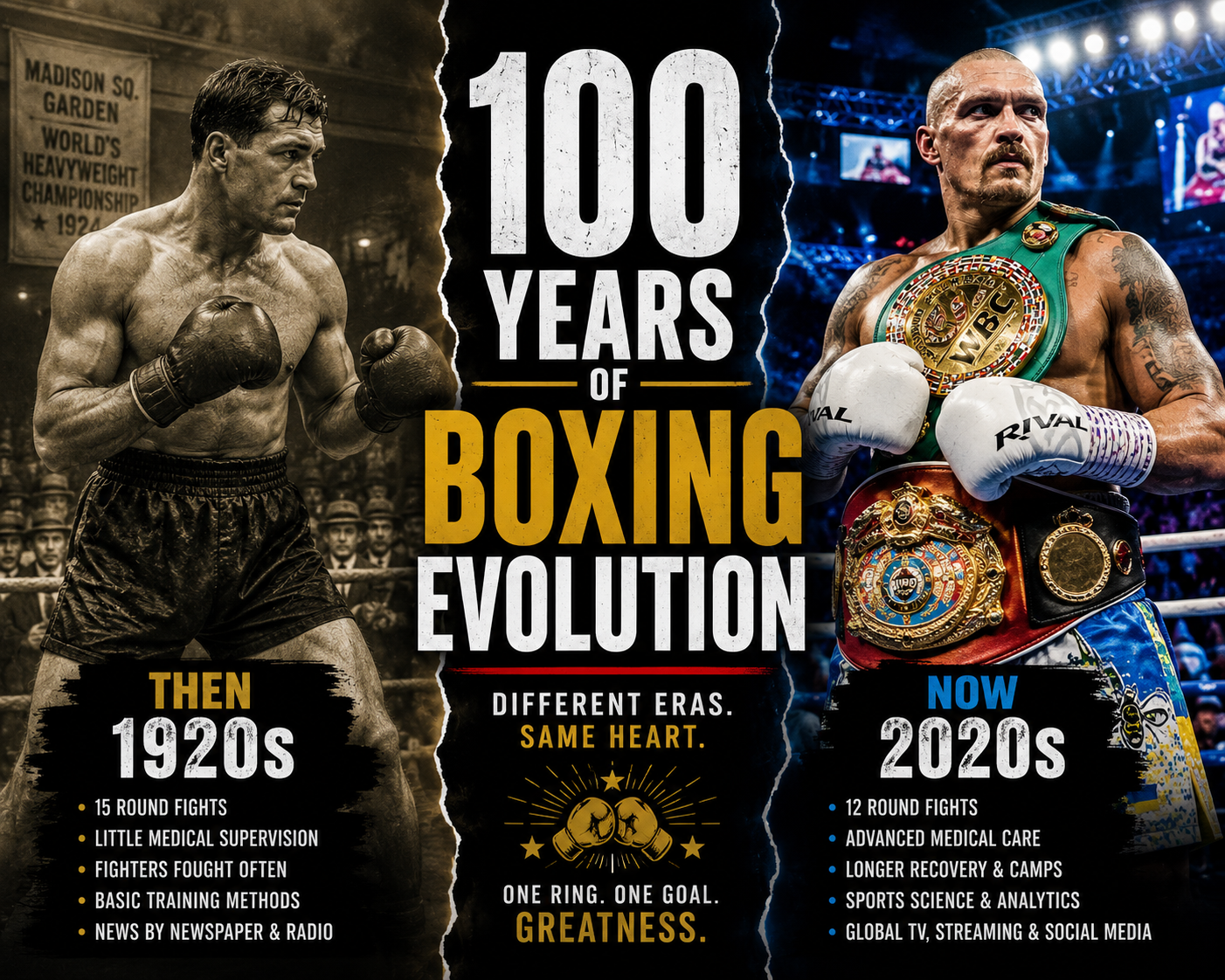
Boxing has changed beyond recognition over the past 100 years. From smoky halls packed with thousands of passionate fans to sold out arenas and global pay per view events, the sport has evolved in almost every way imaginable. Training methods, championship rules, fighter safety and even the way boxing is watched have all been transformed, yet the heart of the sport remains exactly the same. Two fighters still step into the ring with everything on the line.
Modern boxing is faster, safer and more scientific than ever before, but many fans still argue that the toughest era belonged to the champions of the early twentieth century. The debate has become one of the biggest discussions in boxing history.
From endless battles to championship science
A century ago, professional boxing looked very different. World title fights could last 15 rounds and, in some cases before that, even longer. Fighters often competed several times a month, with far less recovery time than today's athletes. Medical supervision was limited and weight cutting was nowhere near as advanced as it is now.
Today's world title fights are contested over 12 rounds, with stricter medical checks before and after every contest. Modern commissions place far greater emphasis on fighter welfare, reducing unnecessary risks while allowing athletes to perform at their highest level.
The introduction of governing bodies such as the WBC, WBA, IBF and WBO also brought greater structure to world boxing, although the existence of multiple champions continues to fuel debate within the boxing community.
Training has entered a new era
Boxers from the 1920s and 1930s relied heavily on roadwork, sparring and natural toughness. Nutrition was basic, recovery methods were limited and sports science barely existed. Many fighters learned through experience rather than detailed coaching.
Fast forward to today and elite fighters work with nutritionists, strength coaches, physiotherapists, psychologists and performance analysts. Every aspect of a training camp is carefully monitored. Heart rate data, punch statistics and recovery programmes all play a role in preparing for fight night.
Despite those advances, the fundamentals remain unchanged. Discipline, dedication and courage cannot be measured by technology, and every heavyweight champion still needs those qualities when the first bell rings.
Global audiences have transformed the sport
One of the biggest differences is how fans consume boxing news and boxing results. A hundred years ago, supporters relied on newspapers and radio reports. Today, fans watch live broadcasts from anywhere in the world, follow every press conference online and debate boxing rankings across social media within seconds of a fight ending.
The commercial side of the sport has grown just as dramatically. Television deals, sponsorships and global streaming platforms have created opportunities for fighters to earn life changing sums, while major fight nights now attract millions of viewers across multiple continents.
At the same time, British boxing has enjoyed enormous growth. Packed stadium events and passionate crowds have helped establish the United Kingdom as one of the sport's biggest markets alongside the United States and the Middle East.
What Happens Next
Boxing will continue to evolve as technology, training and fan expectations change. Artificial intelligence, advanced performance tracking and global broadcasting are already shaping the next generation of professional boxing. While the sport may look very different another hundred years from now, its greatest appeal will remain unchanged. Two fighters, one ring and the pursuit of greatness. Boxing Wiretap will continue exploring the biggest stories from boxing history alongside the latest boxing news, expert boxing analysis and fight night coverage.